Preserving the History of the Delaware Valley
"History is revealing when it’s reliable and well researched. The challenge is knowing where to find it. Organizing history for others to use is even more challenging. Sharing that history is the reward for these efforts."
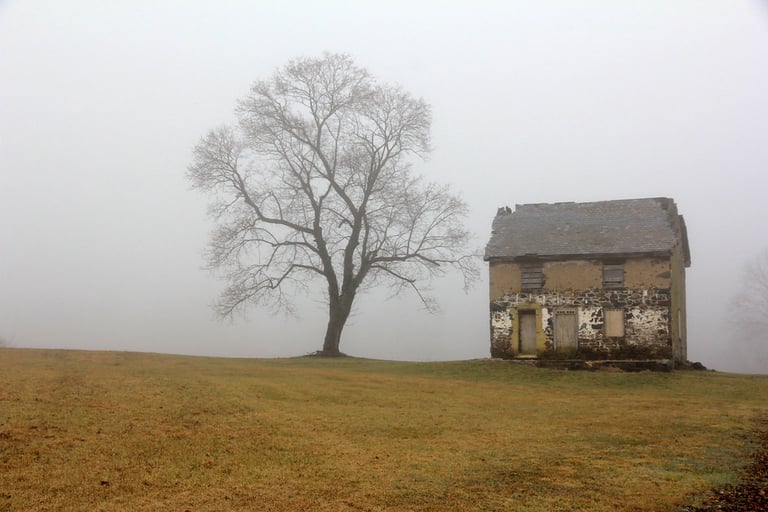
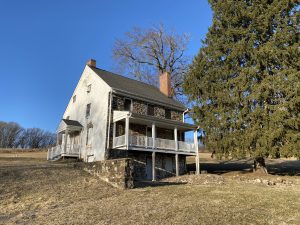
This old farmhouse stands on the edge of the Wilmington Country Club. February 11, 2013.
Gene Castellano - Writer, Photographer, and Historian
Historic Wilmington & Beyond
I’ve always wanted to know more about the history of places where I’ve lived, worked and gone to getaway. In too many cases, the story wasn’t easy to find and required long hours of research and detective work to connect newspapers articles, paragraphs from books and photographs in a library or archive. Those efforts have resulted in manuscripts, publications, and lectures that I’ve created to help others understand how land use evolved in the Delaware Valley, especially in the 19th and 20thCenturies. Among the topics of special interest that I have researched are:
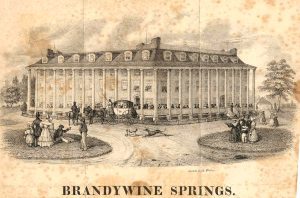
The early architecture and customs of the Brandywine Springs mineral springs resort in Wilmington, Delaware, which began in 1827. It later became a popular amusement park ,then abandoned woods and now a successful county park. My publications and lectures digitally unearthed the original hotel, nearby landmarks, and their precise locations.
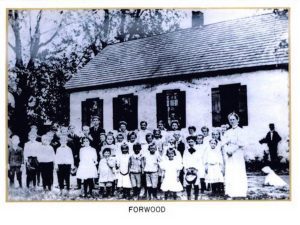
The dairy farms of the Brandywine Hundred in northern Delaware and their transition from openland to neighborhoods, supporting businesses, schools, and parks. Areas of interest included what are now the neighborhoods of Westwood Manor, Forwood, Sharpley, Woodbrook, Eden Ridge and Tavistock. In particular, the lands of the Forwood family sparked several controversial development plans that led to abandoned properties, the demolition of an historic school building, and the conversion of open green space to retail shopping and housing.
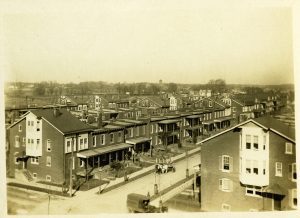
The creation of the Flats neighborhood and East Side row homes in the City of Wilmington by William Bancroft. The Flats were one of the first affordable living developments in the United States and continue to be a success story managed by Bancroft’s Woodlawn Trustees, Inc.
The story of industrialist William Bancroft and his ideas on thoughtful development of farmland north of the Brandywine River in Delaware and Pennsylvania. His founding of Woodlawn Trustees resulted in the creation of state and national parks as well as a planned mix of residential neighborhoods, retail businesses, churches and community centers.
After retiring from W. L. Gore and Associates, I worked as a private archivist for a family who started up a successful and respected global company. That work led me to joining the staff at Hagley Museum and Library to launch a new venture called Hagley Heritage Curators, an initiative to help companies and trade associations preserve and research their history. While at Hagley, I became familiar with the extensive archives of the Bancroft Textile Mills and developed a series of lectures about them for the University of Delaware’s Osher Lifelong Learning Institute.
I also had the opportunity to work with the archive collections and records of Wawa Food Markets, about whom I wrote a series of articles on their evolution from a dairy farm to a successful network of fast-food markets.
I’m currently the historian and archivist for Woodlawn Trustees, Inc., founded through the philanthropy of William Bancroft to carry out his work of thoughtful development and affordable housing in northern Delaware.


Land Development and Neighborhoods
Business and Industry
Much of my work is rooted in long-term historical research: documenting how neighborhoods, institutions, and landscapes in the Delaware Valley evolved over time. My publications explore topics ranging from the Brandywine Springs resort and the dairy farms of northern Delaware to industrial history, affordable housing, and the legacy of William P. Bancroft. These projects bring together archival records, photographs, maps, and oral histories to tell reliable, place-based stories.
Research & Publications
Photographer
I like to let my photographs speak for where I’ve been and what I’ve seen. Click on an image for a full view.